


From burnout to balance: Holiday thoughts

Paris. The end of a long, long day of sightseeing. I turned to my friend’s 10-year-old son and asked him what was the best thing we had done that day

From burnout to balance: Objects of my affection

If you are moderately well off, and able to buy yourself nice things – homewares, clothes, fitness gear, gadgets

Tuesday, July 14, 2020

Is there an easy way to eat gluten-free at lunchtimes?

Is there an easy way to eat gluten-free at lunchtimes?

Lunch is the bane of my existence. Of all the meals I’ve worked on since I was diagnosed as gluten-intolerant, lunch has consistently been the most difficult.

It’s okay if I have planned and prepared, if I have leftovers from the day before. But if I have run out of the house in the morning, or just have nothing planned, it can be very difficult to buy lunch in the light industrial area where I work.

From my years of frustration, here are some ideas both for making sure you have a fall back and also for when you do end up buying food.

Tips for office lunches

Far and away the easiest option is to make your lunch and take it with you. There are lots of gluten-free breads around now that are reasonably nice to eat, or you can make your own loaf. A good idea is to slice it up and freeze it in smaller packets. Take as many as you need each day to make sandwiches. Leftovers are also great, as is homemade sushi, salads, soup and crust-free quiches.

If you have access to a freezer at work, you can keep a stash of food at hand for the days when you just don’t have time to prepare anything. Here are some ideas for freezer food and items which will keep under your desk!

  • Bread – pop a loaf of sliced gluten-free bread in the freezer. It’s easy to take a couple of pieces at a time and either toast them or make a toasted sandwich. Keep a small bag of grated cheese in the freezer as well to put in the sandwich. Keep some hummus in the fridge to have on the toast.
  • Frozen soup – either premade (there are several brands who do lovely gluten-free soups) or homemade.
  • Gluten-free crackers and hummus – I’d use homemade hummus as it’s a lot more economical and you can guarantee what goes into it. However, there are a number of commercial brands of hummus which are gluten-free. With a container of crackers under your desk and some hummus in the fridge, you have a great emergency meal.
  • Baked beans – I’m not a fan, but they’re a good, nutritious meal. Keep a can under your desk – they’re not going to go off!
  • Quiches/frittatas – make individual serves of these in Texas muffin tins. Gladwrap them and freeze as individual portions. Either keep them in the freezer at work, or grab them from the freezer at home on your way out to work.
  • Scones – I often knock together a batch of scones for a quick and easy weekend lunch. As I’m the only gluten-intolerant person in my house, there are always leftover scones. Wrap these individually and throw them in the freezer, too. Microwaving them makes them very edible.

Obviously these ideas only work if you are in an office type environment where you have access to a freezer, fridge and microwave. If you’re a road worker, a gardener or work somewhere that you don’t have access to these things, I’d love to know what you do for gluten-free lunches. Leave your comments below.

Picnic lunches are basically horrible if they include pre-made sandwiches – I learnt the hard way that you can’t make a sandwich of frozen bread in the morning and hope that it has defrosted by lunchtime, because it won’t have! For picnics, go with cold meat, cheese and gluten-free crackers, quiches, frittatas and gluten-free muffins, along with plenty of fresh fruit.

Some days though, you just have no time (or inclination) to make lunch and you realise you’ve used up your emergency stash of freezer food. What then?

Eating out

Stay away from most fast food joints, pubs, bakeries.

Good places to buy food (although not every day obviously!):

  • Sushi outlets – but always check whether they have used malt vinegar in the rice, and stay away from the soy sauce, because it normally contains wheat.
  • Japanese – there’s an increasing number of places which do donburi (rice, veges and meat). Provided the meat isn’t coated with batter (or check as it might be a tempura batter using cornflour) or cooked with soy, this might be a reasonable option.
  • Curry – obviously you can’t eat the naan, but most curries and even some bhaji and pakora are gluten-free. And of course, they’re served on rice.
  • Roast palace type places – just check they haven’t given you gravy and that they haven’t coated the meat with soy sauce, Worcester or HP sauces.
  • Hell Pizza – who do very nice gluten-free bases.
  • Mexican food outlets – like Mexicali Fresh, where almost everything is gluten-free and also very healthy and fresh.

As with everything else to do with gluten-free eating, planning is key, tiresome though it can be. What are your suggestions for easy and sensible gluten-free lunches? Share your comments below.

Weight loss update

It’s taken me six weeks, but I’m finally beginning to settle into the idea that eating well and healthily is not restrictive nor is it especially onerous. The plan I am using lets me have an occasional chocolate snack or chips (in very small doses) so when I have a night like Saturday when I’m movie-watching with my daughters and we all indulge a little too much in the treats, I can compensate and adjust without feeling like I’ve completely failed. This is very useful for me as someone who is already restricted in what I eat, because it means I don’t feel as if I’m depriving myself.

So, I’m down 6.3kgs, which is about a dress size. I’ve lost 7cm off my waist and a bit less off everywhere else, and I am back wearing my ‘middle-size’ jeans. I’m only managing exercise a couple of times a week (soccer with Master 7, and water polo and swimming with the oldest three children) so my next step is to add in a walk or some yoga as a regular component of the week.

Helping me out at the moment is that I’ve just completed week 1 of Dry July, giving up alcohol for July to raise money for cancer sufferers. So far I haven’t missed it.

Lisa

For those wanting more information on coeliac disease, check out the NZ Coeliac Society website www.coeliac.org.nz.

This blog is the opinion and experiences of its author and should not be taken as medical or dietetic advice. Healthy Food Guide has not verified the content and cannot endorse any advice given. Healthy Food Guide recommends seeking professional health advice for specific complaints or symptoms.

Monday, July 13, 2020

Is quinoa really all it’s cracked up to be?

Is quinoa really all it’s cracked up to be?

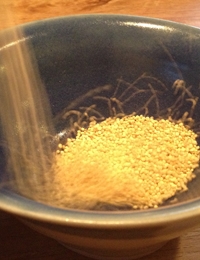
I’m a latecomer to the whole concept of quinoa. I kept reading articles about it, and people were raving about it, so I bought some a couple of years ago and made a salad from it. I was less than impressed. But a couple of recent run-ins with quinoa have completely changed my mind about this humble ancient grain.

The first thing I had to learn was how to pronounce this. It’s not kwee-no-a as it looks, but keen-wah. It originated in South America and has been used for over 3000 years. It’s related to beetroot and spinach, and contains essential amino acids like lysine as well as good quantities of calcium, phosphorus and iron. Quinoa has a high protein content for a pseudo-cereal and is useful for vegans and those who are lactose intolerant because of its calcium content. It’s high in fibre (7g per 100g serving) and best of all is gluten-free.

My first pleasant experience with quinoa was at a recent birthday event when I had a lovely lunch based around quinoa. I’ve adapted the recipe and here’s what I made as a quick, easy and healthy dinner.

(If you are coeliac, make sure your spices, stock and chilli sauce are gluten-free versions.)

Moroccan spiced chicken with quinoa salad

Ingredients

300g chicken tenderloins or breast meat, cut into large strips
2 teaspoons ground cumin
2 teaspoons ground coriander
1 teaspoon paprika
1 teaspoon cinnamon
1/2 teaspoon chilli powder (optional)
1 cup quinoa
2 cups water or chicken stock
2 spring onions
1/2 avocado
handful of sun-dried tomatoes
1 capsicum (any colour will do)
2 sticks celery, finely chopped
1 cup cauliflower or broccoli florets
1/2 cup chopped fresh coriander leaves
2 tablespoons chopped fresh mint leaves (optional)
1 lemon
1/2 teaspoon sesame oil (optional)
salt and pepper
1/2 cup natural unsweetened yoghurt
sweet chilli sauce
baby spinach or rocket leaves

Step 1 Place the quinoa and water into a saucepan, bring to the boil and reduce to a simmer. Stir a few times during cooking. It will take about 20 minutes for the quinoa to cook, and all the liquid should be absorbed by the end of the cooking.

Step 2 Put the chicken into a clean plastic bag with the cumin, coriander, paprika, cinnamon and chilli powder (if using) and shake until well coated. Spray a frying pan with cooking oil and stir until the chicken is cooked, about 10 minutes.

Step 3 Cook the cauliflower in a pot or the microwave until just tender.

Step 4 Chop up the spring onions, sun-dried tomatoes, capsicum, celery, coriander and mint (if using). Add these, along with the cauliflower, to the cooked quinoa and leave in the pot for a few minutes with the lid on.

Step 5 Squeeze the lemon juice and add the sesame oil (if using) to the quinoa and stir through.

Step 6 To serve, place the salad leaves on a plate, with a serving of quinoa on top. Add chicken and avocado to the pile. Pour over yoghurt and sweet chilli sauce to taste. Garnish with a couple of coriander leaves.

This is a lovely, fresh tasting dinner, is very colourful and great for a weeknight where you don’t have much time. You could also add in diced courgette for extra vegetable content, or really use any combination of vegetables you choose. The leftovers make a wonderful lunch the next day.

My other experience with quinoa has been with the Quinoa Bread Mix from the Gluten Free Store. The mix was very easy to make up and made a full-sized loaf, not a shrunken gluten-free one. I added sunflower and pumpkin seeds, as well as sun-dried tomatoes and rosemary, and it was delicious. At $9.00 for a packet which makes two big loaves, it’s considerably cheaper than a store-bought loaf and very quick to make. And the exercise of mixing it by hand was probably very good for my arms!

You can buy quinoa for the recipe above at your local supermarket. I found it in the bulk bins at the nearby Pak n Save. Ceres Organics also does a range of quinoa. Quinoa flour is a little harder to find, but again, the Gluten Free Store, Gluten free Grocer or Natural Organics all stock it.

What are your experiences with quinoa? Have you any recipes or tips you can share?

Weight loss update – or what I have learned about losing weight over the last three weeks!

I’ve now lost 8kgs, but have stalled a little over the last couple of weeks. I’ve been away for work and have had a couple of days where I was at an event, so have been a bit haphazard about food tracking. It turns out that if I don’t note down everything I eat, I forget that I have eaten some things, and clearly eat more than I should! If I can see those points ticking down during the day, I’m far more aware of what is going in my mouth. Lesson number one: food tracking is vital.

However, while I haven’t lost any weight in the last couple of weeks, I haven’t gained any either, and when I measured myself, it turns out I have lost more centimetres. So lesson number two: don’t just weigh yourself, you should always measure as well, especially when you add in exercise.

I’ve also become a bit casual about portion sizes – so how MUCH I am eating – and perhaps a bit casual with the treats as well. I’ve had to reset a little and do a small amount of weighing and measuring to get my eye back in to accurately assess how much I’m really eating. Lesson number three: go back to the basics.

Dry July has gone well, and despite a couple of parties, I have remained dry! Only a few more days to go now.

Lisa

For those wanting more information on coeliac disease, check out the NZ Coeliac Society website www.coeliac.org.nz.

This blog is the opinion and experiences of its author and should not be taken as medical or dietetic advice. Healthy Food Guide has not verified the content and cannot endorse any advice given. Healthy Food Guide recommends seeking professional health advice for specific complaints or symptoms.
Sunday, July 12, 2020

Gluten-free dinners – the easiest meal of the day!

Gluten-free dinners – the easiest meal of the day!

I know, I know, you’re thinking I’m a madwoman! But actually, eating a gluten-free dinner just isn’t that hard, especially at home.

Entertaining at home in summer is great because of the humble barbecue. I was never a huge fan of barbecues until I started to eat gluten-free food. Just think about it – meat, salads, potato salads. How easy is that? Yes, there are still pasta salads and bread for the sausages, and you do have to be careful of cross-contamination from others using soy sauce or gluten-containing products in their marinades, or salad dressings. But if you’re the one making the potato salad, you can make sure the mayonnaise is gluten-free, and then you’ve got a lovely meal! Here’s a tip about making a potato salad a little healthier – use half mayonnaise and half light sour cream or natural yoghurt. It tastes divine, and is a lighter option. Another great secret? Gluten-free sausages are actually FAR nicer than normal ones, and there is now a huge range readily available at the supermarket. The great thing about barbecues is they’re so quick and easy that you can do them often. I especially like a roast vege salad done on the barbecue – courgettes, eggplant, capsicum and in spring, asparagus with some fresh herbs and a light dressing of oil and lemon juice.

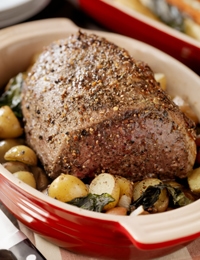
Of course, it’s winter at the moment, so if you’re entertaining at home, another great idea is the roast dinner. This doesn’t need to be an unhealthy option. I think we all know that meat doesn’t need additional fat to roast in – you can use water with a dash of wine and seasonings like garlic and herbs. Kumara and potatoes roast well with oven spray, and you can do a roast vegetable salad (pumpkin, kumara, carrot, parsnip, beetroot) rather than traditional separate roast vegetables. Gravy is very easy to make from scratch. Remove the meat from the roasting dish and place the roasting dish on an element on the stove top (of course, the roasting dish needs to be metal!). To the meat scrapings, add a couple of tablespoons of cornflour or glutinous rice flour and stir through. Use some of the water from any green vegetables you cook and blend all together. Add additional herbs, salt and pepper, or a dash of wine for extra flavour.

A real staple for us, especially in winter, is the use of our crockpot. This is great for casseroles, which we eat with baked or mashed potatoes or rice. This works really well for those evenings when we have people going in multiple directions at once. I often assemble everything in the crockpot the night before and then just turn it on in the morning before work. It’s great coming home to the smell of a casserole! We also use the crockpot to make a very tender corned beef. Add a tablespoon of brown sugar, a tablespoon of white vinegar, a few peppercorns, an onion chopped into quarters and a couple of carrots to the crockpot as well, and cover the beef with water. We eat the corned beef as is with mashed potato, or if we have time, make a corned beef hash with mashed potato and cabbage or spinach and dry-fry it to make a nice crispy top or bottom.

Some other options are nachos, chilli beef and my personal favourite, a curry! Served with rice and poppadums (not all are gluten-free, so check the ingredients, but a lot of them are), this is a great and warming dinner. I also have a nice Moroccan beef (or chicken) recipe which is a staple in our house that we serve on brown rice or quinoa.

I’ve been on the Coeliac Society website a bit recently, and they have added a gluten-free dining out guide. You can choose your region, the type of food you’re looking for and the type of establishment you’re interested in (café, restaurant etc). They’re still building the database at the moment, but it’s going to be a very useful tool for all of us! See the Dining Guide here.

What are your options for easy dinners for the family? I’m always keen to try new things!

Weight-loss update

Well, I’ve had a bit of a breakthrough this last week! I’m down 10.5kg, have lost 15cm off my waist and 10cm off my hips and bust. I’m certainly starting to notice the difference in terms of my clothes (back into my smaller jeans!) and my knees are feeling a lot better. It’s only taking one person to zip me into my waterpolo togs, which is a nice change from having two daughters squidge me in! I’m about half way to my goal weight, and am finding that it is not too arduous. The whole family is benefiting as well, I think. We’ve always eaten reasonably healthily at home, but I think our portions have been a bit large. Remembering the whole dividing the plate into quarters – one half vegetables, one quarter carbohydrates and one quarter protein – is really helpful!

Lisa

For those wanting more information on coeliac disease, check out the NZ Coeliac Society website www.coeliac.org.nz.

This blog is the opinion and experiences of its author and should not be taken as medical or dietetic advice. Healthy Food Guide has not verified the content and cannot endorse any advice given. Healthy Food Guide recommends seeking professional health advice for specific complaints or symptoms.
Saturday, July 11, 2020

The wonders of modern technology for the gluten-free cook

The wonders of modern technology for the gluten-free cook

I am an old-fashioned kind of person. I like to do things the manual way when it comes to cooking. The proper way. I don’t really like packet mixes and jar sauces. I like to make things from scratch.

For a long time, I have resisted the lure of too many mechanical devices in the kitchen. Of course, I’ve had a microwave and a dishwasher is an essential with the number of children in our house, and I do use a blender especially for soup. Several years ago I gave in and acquired a hand mixer for meringues, but I still whisked cream by hand and used a wooden spoon for cakes.

Then I was told to stop eating gluten, and a whole new world of cooking opened up. It was much harder! I did the Gluten Free Made Easy cooking course in February and it was fantastic. But mixing a stiff gluten-free bread batter by hand for six minutes is a whole lot harder than it sounds. Gluten-free cooking is different, and whilst it was doing the world of good to my biceps, it was very, very hard work. And the way that Neville and Judy used their bench mixer did give me a little bit of machine envy. Some of you may remember my earlier post about the course and my comments then. I should note that when I am talking about Judy and Neville’s mixer, it is a 1500 watt stand-on-the-bench mixer with a 6.7 litre bowl and an assortment of attachments which would make a robot jealous. Still, I struggled on in the old-fashioned way.

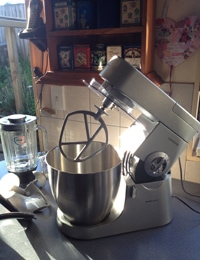
Then my blender died. Hummus and soup suddenly got much harder. And so, after much deliberation, and saving, I am now the proud owner of a very shiny Kenwood KMM770, which has a mincer AND a blender attachment. We are very keen on the idea of mincing our own meat and getting a better quality of mince with lower fat for a better price than we pay at the supermarket. And I’m keen to get back to making my own hummus– again, partly because of the cost, but also because I can control the ingredients.

Watch this space for great recipes and results from the new mixer! If you have any recipes which work best with a mixer, share them below.

As I was looking at my gleaming, shiny new glorious piece of machinery, an email came into my inbox and made me realise how shallow and materialistic I am. The email was from a blog I follow from Steve Wiens because I find it challenging and thought provoking. This weekend, he’s running from one end of the Grand Canyon to the other. Rim to rim. In one day. Why is he doing this? Because he heard about the plight of Ethiopian teenage girls who were being sold into the sex trade and decided he wanted to make a difference. He intends to raise $50,000 dollars to free 50 of these young women and provide them with job training so they never have to return to the life they’ve been living.

I’ve kept my beautiful new machine, because I think even though I am a little shallow and materialistic, it is something that we will get a lot of use out of, and I worked hard for it. But I have donated to Steve’s amazing cause, and am passing his message on here – maybe partly to assuage my conscience. Here’s the link to his blog.

Weight loss update

It’s been just over three months since I decided it was time to change my eating habits and lifestyle so I would still be able to run around with my youngest children the way I do with my older ones. I’ve lost 12.2kg and am about halfway there. It’s getting much slower on the weight-loss front, but it has become much more of a habit to eat smaller portions and generally consume healthier food. Luckily for me, my workplace has just begun a Health Challenge which includes giving us pedometers for eight weeks and setting us all a 10,000 Steps Challenge. This is coming at just the right time for me, as the extra exercise will hopefully take the weight-loss back up a bit. I’ve done a couple of days with the pedometer to get a baseline, and with my normal amount of walking around, I do about 5,000 steps. So I need to work out how to DOUBLE that, and help my team be the first to virtually walk from Cape Reinga to Bluff, and back again. I’ll keep you updated with that project as well!

Until next time.

Lisa

This blog is the opinion and experiences of its author and should not be taken as medical or dietetic advice. Healthy Food Guide has not verified the content and cannot endorse any advice given. Healthy Food Guide recommends seeking professional health advice for specific complaints or symptoms.
Friday, July 10, 2020

Cuisines of the world

Cuisines of the world

Being gluten-free doesn’t mean that you have to restrict the types of cuisines you eat.

When I was newly diagnosed as gluten-intolerant, I immediately retreated into a very safe food place with a very narrow range of ingredients. That lasted about, oh, three days until I got bored. Then I started thinking about what sort of foods I could eat. At first, I was very discouraged. Standard European cuisine was a bust, unless I did a lot of conversion. But there was a light on the horizon – ethnic foods. Let’s review some of the really, really good ones!

Indian

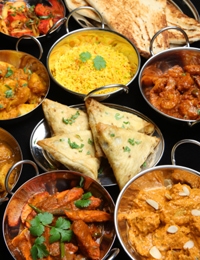
This is top of my list. Apart from naan bread, you can eat almost anything at an Indian restaurant and because very little of it contains gluten, the environment in the kitchen is reasonably gluten-free. Think about it for a minute – pakora are normally made of chickpea flour, poppadums are pea flour. Most of the sauces are thickened with almonds or cashews, or simply by long, slow cooking. And they’re served with rice. Yes, they’re sometimes a high-fat option, but you can choose a saag – spinach – based curry rather than a richer dish like butter chicken or chicken tikka masala.

What to watch out for

Poppadums aren’t always made with pea flour, so do check the ingredients list. Ditto pakora – always ask what flour they’ve used. And as always, double-check the ingredients.

Mexican

Healthy, flavourful and often gluten-free. Obviously flour tortillas are no good. But corn tortilla are generally fine, and it’s becoming easier to find soft corn tortilla – although nothing rivalling the 50 white corn tortilla I found in the US for $2.95! Mexican is fresh and colourful and the coriander and cumin flavours which are most prevalent sit nicely on the tongue. Nachos, tacos, even enchiladas. Fresh salsa, guacamole – yum, yum, yum and as we come into summer, even more yum.

What to watch out for

Flavoured corn chips! Nachos looks like a safe enough dish, but even checking with the kitchen staff that the chips are plain does not always guarantee they are. Most flavoured corn chips use a flour-based flavour.

Japanese

Sushi, donburi and a variety of stir fries. Especially if you’re making this at home, Japanese is a great idea. If you’re eating out, it can also be a pretty good option.

What to watch out for

Soy sauce is the biggest thing. Most soy sauce contains wheat, although it is relatively easy to find brands which don’t. Teriyaki sauces generally have a large soy component. Also, sometimes in sushi the vinegar contains gluten. If they’ve used rice wine, you’re normally fine.

Middle Eastern

Okay, so I know we say Middle Eastern and the first thing most of us think of is couscous. I’ve had restaurants try and serve me a dish with couscous in it and say that it is gluten-free. For the record, couscous is made from crushed durum WHEAT, so is absolutely not gluten-free! However, I’ve found that you can substitute quinoa very successfully for couscous with little change in taste or texture. Some wonderful Middle Eastern options include falafels, which again you can make at home very easily or buy. There are some commercial falafel mixes available from the local supermarket. Sweet and savoury are the keynotes of Middle Eastern food, so cinnamon combined with chilli, prunes combined with almonds and chicken, and lots of fresh tastes. And the kebabs on rice with salad are normally fine too. Kofte (meatballs), kebabs on skewers and lovely fresh salads as we come into summer. Yum.

What to watch out for

Falafels are easily made without flour. However, some mixes do contain wheat and some commercially available ones do too. As with anything you buy, always ask. Check what marinade is used on the big meat kebabs in case it includes soy.

These are some of my favourites, which are very accessible both eating out and making at home. And who said gluten-free had to be tasteless?
What are your favourites?

Weight loss update

I’m sitting on 13kg lost to date, and people are starting to notice that I’m looking skinnier. I look at my ID badge photo at work which was taken in early May and there is a noticeable difference. I now have a whole new wardrobe – those clothes I haven’t been able to wear for the last couple of years. So I’m really seeing a significant change. Another 9kgs to go, but I feel I can make that. In the last couple of weeks I have successfully given up chocolate bars, largely because they take up so much of my daily food allowance if I eat them. I feel I should stand up here and say, “Hi. My name is Lisa and it’s been 23 days since I ate a chocolate bar”. I really feel like I’m getting the hang of how to eat the right amount, and I’m not as resentful of the restrictions because I’m choosing what those restrictions are.

The 10,000 Steps Challenge at work is really helping with this. I’ve worn a pedometer before and was always interested to see how many steps I did. But now that I’m part of a team and they’re relying on me to do my 10,000 steps, I feel a real impetus. So much so that I am getting up most mornings at 6am to go walking. Yep. In the cold and dark. And I am not a morning person. The upshot of this is that I can eat a little more because I’m exercising more. Week 3 of the Step Challenge, and it’s going well. The knock on benefit is that the other day I could see I was a long way from my target, so took my smallest boys to the park. We played cops and robbers, ambled around, looked at the Waterview tunnel works, came home the long way and bought them an ice cream. The boys were really proud of themselves for helping me do another 3,000 steps, and wanted to do it again. Have any of you worn a pedometer, and did it help you to exercise regularly?

Lisa

For those wanting more information on coeliac disease, check out the NZ Coeliac Society website www.coeliac.org.nz.

This blog is the opinion and experiences of its author and should not be taken as medical or dietetic advice. Healthy Food Guide has not verified the content and cannot endorse any advice given. Healthy Food Guide recommends seeking professional health advice for specific complaints or symptoms.
Thursday, July 9, 2020

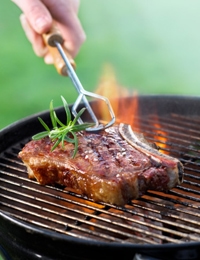
Gluten-free summer – the joy of barbecues

Gluten-free summer – the joy of barbecues

Before I was diagnosed as gluten-intolerant, I wasn’t very fond of barbecues. Now, however, the longer days and warmer weather herald the upcoming barbecue season, and I am delighted!

Prior to the last few years, I have thought of a barbecue as a burnt sausage and a piece of bread, a boring salad and steak either raw or dry. Once I was diagnosed as gluten-intolerant, I greeted barbecues with relief because they were an easy ‘eat out’ meal at other people’s houses – and gluten-free sausages are especially nice. But I grew quickly tired of the sausages, steak and boring salads, so have developed a variety of dishes which make barbecues a very tasty meal. Here are my suggestions!

Chicken and prunes wrapped with bacon

4 boneless chicken breasts
prunes or dried apricots
cacon – strips rather than rashers
skewers
lemon juice
1/2 cup white wine
salt and pepper

Step 1 Cut chicken breasts into strips. Place a prune into the chicken and wrap the chicken around the prune. Take a rasher of bacon and wrap it tightly around the prune and chicken and form into a ball. Place onto a skewer. Repeat with all the chicken, prunes and bacon.

Step 2 Pour lemon juice and a little white wine over the chicken. Cook on the barbecue until the bacon is crispy. Do make sure to check that the chicken is cooked through.

Obviously this isn’t a low-fat option with the bacon, but every now and again it is lovely and a nice change.

Lisa’s warm potato salad

boiled new potatoes (still firm)
spring onions, sliced (or red onions, finely diced)
red and green capsicum, finely diced
radish, diced
1/2 cup natural yoghurt or mayonnaise
1/2 cup light sour cream
2 teaspoons seed mustard
salt and pepper
1/2 cup fresh herbs, chopped (I normally use a good amount of mint, oregano and thyme)

Step 1 Put the potatoes in a glass bowl. Mix the remaining ingredients together, pour over the potatoes while they are still warm.

Step 2 Garnish with an additional sprig of mint and serve.

Roast vegetable salad

2-3 capsicums, seeded, cut into big pieces
4-6 courgettes, sliced in long ovals
6-8 small vine-ripened tomatoes, still on the vine
2 egg plants, sliced in rounds
6 field mushrooms, sliced
2 red onions, sliced
2 tablespoons balsalmic vinegar
2 tablespoon oil
salt and pepper
fresh coriander
baby spinach leaves

Step 1 Cook all the vegetables (except the spinach) on the barbecue grill and mix into a large bowl.

Step 2 Pour over oil, vinegar, salt and pepper and mix through coriander and baby spinach leaves. Serve warm or cold.

This salad is also very nice the next day!

Other favourite ideas are fish, chicken and beef kebabs, with vegetables; fish wrapped in tinfoil with lemon, garlic and lime leaves; a slightly fancier salad using spinach, feta, cherry tomatoes, nuts and dried fruit with a light lemon juice and sesame oil dressing; or field mushrooms cooked on the grill plate with garlic butter in them.

What are your favourites for the barbecue? Leave your comments below.

Gluten-free Grocer update

Many of you may use the Gluten-free Grocer, based at the top end of Mt Eden Road (Auckland). I received their recent newsletter and they are closing down their physical store. They will still have an online presence, but you won’t be able to pop into the shop any more.

Weight-loss update

I am down 14kgs over the last four and a bit months and still going down. Our work 10,000 steps challenge has been a great help and I am now getting up earlier most mornings to walk. I got all the way up to 15,000 steps one day and was very tired by the end of the day! The same things are still holding true – I need to keep tracking my food, watching my portion sizes and being active. I’m still 8kgs from my goal weight, but it seems I will get there! By Christmas may be a little ambitious, but I do think it will happen, which is exciting!

Lisa

For those wanting more information on coeliac disease, check out the NZ Coeliac Society website www.coeliac.org.nz.

This blog is the opinion and experiences of its author and should not be taken as medical or dietetic advice. Healthy Food Guide has not verified the content and cannot endorse any advice given. Healthy Food Guide recommends seeking professional health advice for specific complaints or symptoms.
Wednesday, July 8, 2020

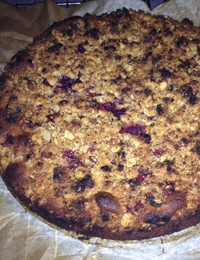
Gluten-free blueberry crumble cake

Gluten-free blueberry crumble cake

This is a favourite Healthy Food Guide recipe that Niki Bezzant asked me to have a go at converting to gluten free.

It’s taken me several attempts, but I think I have finally come up with an alternative that works as well as the original. My children were very appreciative of the need to trial the actual recipe and then trial the gluten-free versions!

Ingredients

Crumble topping

30g gluten-free flour
35g rice flakes
25g reduced-fat spread
1 tablespoon soft brown sugar
1 tablespoon LSA
10g ground almonds

Cake

125g sugar
125g reduced-fat spread
2 eggs, beaten (or the equivalent in egg replacer)
1 1/2 cups gluten-free flour
2 teaspoons gluten-free baking powder
1 teaspoon baking soda
1 1/2 teaspoons gluten-free ground cinnamon
150ml trim milk
1 cup blueberries, fresh or frozen

Method

Step 1 Heat oven to 180°C. Lightly grease and line a 21cm-round springform cake tin with baking paper.

Step 2 To make crumble, place flour and rice flakes in bowl. Rub in spread with fingers until thoroughly combined. Stir through sugar, LSA and ground almonds.

Step 3 To make cake, in a separate bowl, beat together the sugar and spread until light and fluffy. Slowly add eggs (or egg replacer), then remaining dry ingredients. Stir in milk and mix well. Pour into cake tin. Note that this is more a batter than a firm mix, so don’t be worried if it looks a little runny.

Step 4 Sprinkle with blueberries and crumble topping. Bake for 45-60 minutes or until top is golden brown and cake is springy to the touch.

Tips

  • Always check that ground spices are gluten-free.
  • I placed baking paper over the top of the crumble for the first 30 minutes as I found this gluten-free version took longer to cook and the top was prone to burning. Remove the baking paper for the last half of the cooking to allow the topping to brown up. Remove from oven and leave to cool before removing from the tin.
  • The topping on this cake is also crunchier than the original oat crumble, so if you don’t like the extra crunchiness, simply use 60g of gluten-free flour rather than including the rice flakes as well.
  • I’ve added in the LSA and almonds for a little more texture and a slightly higher fibre content.
  • The gluten-free flour I used was a mixture of rice, glutinous rice, sorghum and tapioca starch, however any standard mix should work well.
  • I’ve made this cake using both eggs and egg replacer and it works well with either.
  • I used raspberries on a later attempt (as I’d used up all my blueberries) and that was extremely nice as well!
  • This is quite a dense cake, and makes a very nice pudding served warm with yoghurt, or eaten cold the next day (we’ve tried it both ways and it has our seal of approval).

Weight-loss update

I’ve struggled to 15kgs lost now, and quite a number of centimetres. People are definitely noticing the difference which is nice, although I do seem to be slowing down on the weight-loss front, with my weekly totals being a couple of hundred grams rather than a kilogram. I’ve been doing so much walking with the 10,000 steps health challenge that I’ve been eating a little more, but still seem to be losing the weight. I guess it’s that balance of output versus input when it comes to calories. It’s getting easier now the weather is warmer and I feel like I want to eat salads and fruit again. It’s about week 20 for me, and I’m getting a little bored with tracking my food, even though I know it really works.

What are your suggestions for keeping me motivated and on track and stopping the boredom seeping in?

Lisa

For those wanting more information on coeliac disease, check out the NZ Coeliac Society website www.coeliac.org.nz.

This blog is the opinion and experiences of its author and should not be taken as medical or dietetic advice. Healthy Food Guide has not verified the content and cannot endorse any advice given. Healthy Food Guide recommends seeking professional health advice for specific complaints or symptoms.