

From burnout to balance: Holiday thoughts

Paris. The end of a long, long day of sightseeing. I turned to my friend’s 10-year-old son and asked him what was the best thing we had done that day

From burnout to balance: Objects of my affection

If you are moderately well off, and able to buy yourself nice things – homewares, clothes, fitness gear, gadgets

Tuesday, July 7, 2020

Gluten-free cookbooks and websites

Gluten-free cookbooks and websites

There’s a wealth of websites, blogs and cookbooks out there for gluten-free people. But how do you know which is a good one? Fret not, I’m here to help navigate!

One of the reasons I started my gluten-free blog was because I was really, really frustrated about not being able to find one place which could give me the information I wanted. Where to buy food, what to buy, how to mix flours properly, how to successfully convert recipes and whether somewhere was a good place to eat or one which made me feel like a freak or poisoned me. I spent a lot of time trawling through websites and trying to sort out which were good ones. Here are a few I ran across which I found some good information from!

If you’re a serious foodie, Gluten-free girl and the chef is a must-visit. They use a variety of unusual ingredients and combinations to produce some amazing dishes. They do videos, have cookbooks and are really interesting in what they do with food. They have two current cookbooks. Their first, Gluten-Free Girl and the Chef: A Love Story with 100 Tempting Recipes, is a more complex book with difficult and exotic recipes (and some straightforward plain ones too). Their second book, Gluten-Free Girl Every Day, is more aimed at busy families. Although they are American and use a lot of the American measurements, they are also about eating naturally, so their recipes translate better for people like me who like to cook from scratch. As a bonus, Shauna James Ahern, the titular ‘Gluten-free Girl’, writes beautifully. www.glutenfreegirl.com

Also a cookbook author and coeliac, with a coeliac child as well, is April Peveteaux at GIMB. She is very funny, and because she is a busy writer, mother and coeliac, her recipes tend to be a little more on the convenience side and less on the make from scratch one. However, she also does great reviews of eateries she visits all over the USA (very useful if you’re travelling there), and she is also unflinchingly honest about the effects of being “glutened”. She uses strong language from time to time, and is very frank, so is probably an R13 website. Her book, Gluten is my Bitch; Rants, Recipes, and Ridiculousness for the Gluten-Free, has recipes and experiences throughout. glutenismybitch.wordpress.com

If you travel, Travel Gluten Free is a good place to visit. Mike, who runs this website, trolls the internet for people’s reviews of gluten-free eateries around the world. He then emails the writers to see if he can use their content to add to his ever-growing list. There are a few of my reviews from New Zealand, USA and Ireland in there, but it’s great if you’re going to a new area. www.travelglutenfree.co.uk

Locally, there are a couple of chefs who have websites and this is really excellent because they use local ingredients and local measurements. I’ve talked before about Neville and Judy Green at Gluten Free Made Easy (GFME). They offer a recipe club with online tutorials, some excellent face-to-face teaching, and relationships with stockists. They know everyone in the business it seems and can share anecdotes and tips and tricks. They love to make people’s lives easier, and this really shows. www.gfme.co.nz

Another New Zealand chef who is gaining some prominence is Jimmy Boswell. He has a cookbook out in print, The New Zealand Gluten-Free Cookbook, and at least one e-cookbook. Like Neville, he does speaking engagements and tutorials. www.jimmyboswell.com

About the same time I began blogging, so did another New Zealander. Bev, the blogger at Coeliac diagnosis – Gluten Free OMG!, has a number of dietary issues aside from being coeliac, but has continued to go out and eat and find new places which are good for coeliacs. She and I have never met, although we do seem to follow each other around quite regularly, so I am sure that if we ever do meet, we’ll say “Oh, you were that person at the…” She eats out a lot more than me, so her suggestions for places to eat are far more extensive than mine. She has also experimented with a lot of recipes, so you can find good local information on her blog. sleepinghorse.wordpress.com

So there are a few online resources. I do tend to find that if I Google a recipe or ingredients, I can find something online, but often I get frustrated by having to convert sticks of butter and look for substitutes to cans of ingredients. I also have a big problem with many gluten-free cookbooks which as far as I am concerned are cheats. They give recipes for things which are already gluten-free. They’re not conversions of normal recipes. This drives me crazy! By all means provide a list of meals which are gluten-free as standard. But if you’re going to write a gluten-free cookbook, convert recipes for goodness sake!

Here are some which do give alternatives, flour mixes and great conversions.

First up, a local offering. Alison Holst and Simon Holst have actually written two books about gluten-free cooking – Gluten-free baking and Gluten-free desserts and baking. Like most of Alison Holst’s books, the recipes are simple and easy to follow. She gives a good bread flour mix and several other offerings. I’ve made a number of things from these books, and they are pretty fool-proof. www.holst.co.nz/Shop/Books.aspx

Next up is Phil Vickery’s Seriously Good! Gluten-free Cooking for Kids. This one’s not local, but it is good because it provides recipes for babies, through toddlers and school age. The recipes are simple enough for children to help with and although it is an English cookbook, the ingredients are typical and available for us here in NZ as well. He also has an informative section on flour mixes and gluten-free foods, as well as a party section! This is endorsed by Coeliac UK.

If you like entertaining or have a sweet tooth (or both!), Sharing Sweet Secrets – Gluten & Wheat Free by Pamela Moriarty may be the cookbook for you. This does have a selection of naturally gluten-free recipes, but it also has a good selection of tarts, cakes, sweet breads and desserts. The writer is Australian, and so the recipes feel local.

One of my favourite cookbooks is Quick-Fix Gluten Free by Robert Landolphi. A friend sent this over from the US, and of course this does mean that I need to do some conversion from American measurements and the like. This is a follow-up to the Gluten Free Every Day Cookbook, with the difference that these are recipes which can be made in 30 minutes. These books were written because Landolphi’s wife was diagnosed as coeliac and he immediately decided to cook delicious and normal food for her. This is not all healthy food, but the recipes work really well. His Buttery Flaky Pie Crust has become a staple for me and his tutorials and anecdotes are very entertaining.

I’m keen to hear any of your cookbook or website recommendations. Do you have one that you use all the time?

Weight-loss update

I’m on week three of not tracking everything I eat. I’m still losing weight, but I suspect I’m going to have to go back to the tracking if I want to get to goal weight. I’m just trying to free wheel and see if I can still be losing weight while not thinking about every bite of food I’m eating. Our 10,000 steps challenge at work has finished. If you’re interested in reading my blog post about my experiences, you can find it here. I’m keeping up the 10,000 steps programme, although I’ve cut back on the steps I’m doing, and haven’t approached the 114,000 steps I managed to finish on in the last week!

Lisa

For those wanting more information on coeliac disease, check out the NZ Coeliac Society website www.coeliac.org.nz.

This blog is the opinion and experiences of its author and should not be taken as medical or dietetic advice. Healthy Food Guide has not verified the content and cannot endorse any advice given. Healthy Food Guide recommends seeking professional health advice for specific complaints or symptoms.

Monday, July 6, 2020

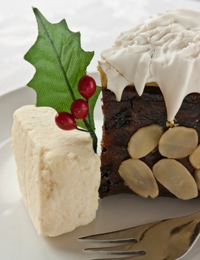
How to make a gluten-free Christmas cake

How to make a gluten-free Christmas cake

It’s December again. Christmas sales, decorations, carol singing at bedtime. End of the year madness with every week full of festivities. Then there’s the cooking –with the added challenge of making everything gluten-free.

My last years Christmas blog had some ideas for Christmas day menus and let you know it wasn’t that difficult to have an easy and very tasty gluten-free Christmas Day. This year, I thought I’d share my foolproof gluten-free Christmas cake with you.

I’ve been making this cake for nearly 20 years. My best friends and I got together and had a massive fruit soaking session , and a month later, I made my first ever Christmas cake. It just so happened that it was the first year of my married life, and I decided to make it a family tradition. I’ve made a Christmas cake every year since then, based on the same recipe. One year we used it as a christening cake for my eldest daughter.

I’ve tweaked the alcohol (often dependent on what was in the cupboard!) and have now successfully converted it to a gluten-free version. I give small cakes away every year and no-one can tell that they are gluten-free. I have scribbled notes year to year of the different variations and have taken out all the things that I don’t like and substituted them with things I do. So I guess what I’m saying about this cake is it’s a very flexible one! And that you too can substitute what you like to make it your own. Having said that, if you don’t like alcohol in your cakes, this may not be the one for you. Here it is.

Gluten-free Christmas cake

Preparation time: five weeks or so! (Even though I say to soak the fruit for a week and leave the cake for a month, I have made the cake right before Christmas and it’s been absolutely fine. So use the times as guidelines, rather than an absolute. It’s one of the things I like best about this cake – it’s very adaptable!)

3 tablespoons whiskey
3 tablespoons cognac or brandy
3 tablespoons port or peach schnapps
3 tablespoons drambuie
3 tablespoons water
1.5 teaspoons angostura bitters

The key is to combine some heavier, sweeter alcohol like a liqueur (so in this case, the port and drambuie) with some plainer spirits. The above is my favourite combination, but this also works well with rum, brandy, port and cherry brandy. One year I even used vodka and peach schnapps and that was very good, although not quite such a dark cake.

Step 1 Put all the alcohol into a saucepan – do not inhale! Then add:

1 teaspoon each cinnamon, ginger, ground cloves
1/4 teaspoon salt
2 teaspoons vanilla essence
1 tablespoon molasses sugar
450g sultanas
225g currants
110g prunes, chopped into small pieces
80g candied peel
50g crystallised ginger, finely chopped
100g dried apricots, finely chopped

Step 2 Stir and bring mixture to the simmering point, then simmer for 15 minutes.

Step 3 Allow to cool completely then pour into an airtight container. Leave in the fridge for at least a week (longer is fine!) shaking or stirring daily.

To make the cake

250g butter, softened
250g brown sugar (demerara is best)
250g gluten-free flour
2 teaspoons xanthan or guar gum
2 teaspoons gluten-free baking powder
5 eggs, or egg replacer, thoroughly beaten

Step 1 Preheat oven to 140°C. Grease and line cake tin.

Step 2 Cream butter and sugar.Add eggs and mix thoroughly. Mix in dry ingredients and stir until combined. Lastly, fold in the fruit mixture, including all the leftover alcohol!

Step 3 Cook cake in the centre of the oven for 3 hours without opening the door, then cover the cake with greaseproof paper and cook for a further hour.

Step 4 Cool for 45 minutes in the tin, then on a wire rack. Wrap in layers of greaseproof paper and store in an airtight container for a month or so.

If you are making smaller cakes, adjust the cooking time accordingly – until a skewer or knife comes out clean. This cake is fine eaten as is, but I normally ice it with almond and white icing – gluten-free of course!

Other options include substituting the ginger and apricots for glacé cherries and chopped almonds. If you didn’t want to use alcohol, I would use a combination of fruit juice and fruit nectar – you want some slightly heavier, stickier component which a nectar would address very well.

The cake keeps really well in an airtight tin. There’s only a couple of us in my house who like fruit cake, so my Christmas cake normally lasts through to the end of January, and is happily eaten with many cups of tea.

Do you have a favourite Christmas recipe you’d like to share?

Weight-loss update

I’ve had a bit of a breakthrough and have now lost 17.6kg, so I am only 4.4kg from my goal weight. I’ve kept up the walking (not quite so many steps as I was doing during our challenge, but am doing some exercise every day), swimming and water polo. I’m not tracking my food as consistently as I was, but I am still very much keeping an eye on portion sizes. If for some reason I don’t manage to do some exercise, there are no treats. I’m keeping any alcohol drinking to the weekends and keeping it to a small amount. We’ll see how Christmas goes – we’re having one dinner at our place on the day, and another a couple of days later at my parents.

Do you have any tips for making sure that you eat properly over the holidays? I’d be keen to hear them.

Lisa

For those wanting more information on coeliac disease, check out the NZ Coeliac Society website www.coeliac.org.nz.

This blog is the opinion and experiences of its author and should not be taken as medical or dietetic advice. Healthy Food Guide has not verified the content and cannot endorse any advice given. Healthy Food Guide recommends seeking professional health advice for specific complaints or symptoms.
Sunday, July 5, 2020

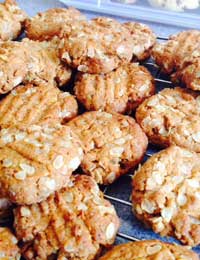
ANZAC biscuits – gluten-free!

ANZAC biscuits – gluten-free!

It’s the time of year when we remember our fallen soldiers, and ANZAC biscuits are a tradition. Here’s a gluten-free take on the Healthy Food Guide favourite.

It’s been a while since I posted here. Life has been very busy for us, and of course the start of the new school year is always a bit manic! However, I am now back with a vengeance and you can expect to see something new from me every fortnight.

Each quarter, I’ll be converting a popular Healthy Food Guide recipe to a gluten-free version of itself. I’ve started with ANZAC biscuits. You’d think that biscuits would be simple. Not so much. This has resulted in quite a number of experiments, which the children have enjoyed! I’ve been playing with a couple of new ingredients – chia seeds and quinoa flakes. Chia seeds are fabulous for extra fibre, and quinoa as an ancient grain is chock full of calcium, protein and fibre. I’ve just run across Ceres Quinoa Flakes – found in the breakfast cereal section at my local New World. They’re very expensive, but they looked to me to be more the consistency of rolled oats, so I got some to try.

Rolled oats is a tricky one, because in many countries they are considered to be gluten-free as the percentage of gluten contained in them is quite small. In New Zealand, however, they are over the required levels to be considered as gluten-free. As they are a large part of what makes ANZAC biscuits the way they are, I decided to find a substitute.

With any recipe I convert, I first make the original recipe. This helps me to see the texture and gauge the correct taste. I can then work towards replicating that in a gluten-free way. I’m also keen to do what I can to increase the fibre content of the gluten-free goodies I make, as many of the gluten-free flour substitutes are low in fibre. Here’s my version of Healthy Food Guide’s ANZAC biscuits. An added bonus of this recipe is that it is very easy to make it dairy-free as well as gluten-free.

Gluten-free ANZAC biscuits

Makes about 24 biscuits

1 tbsp chia seeds mixed with 1/4 cup milk (cow, rice, soy or almond) or water*
1 cup rice flakes OR 1 cup quinoa flakes**
1 cup gluten-free flour (brown rice flour works well, or try using a gluten-free flour mix)***
1 cup coconut
3/4 cup brown sugar
1 tsp cinnamon
2 tsp LSA (optional)
1 tsp xanthan gum
4 tbsp golden syrup
1/2 cup canola oil
1 1/2 tsp baking soda

Step 1 Preheat oven to 160°C. Mix the chia seeds and milk in a small bowl and set aside for about 15 minutes, stirring occasionally.

Step 2 Place all the dry ingredients EXCEPT the baking soda into a bowl and mix well.

Step 3 In a separate bowl, whisk together the chia seeds mix, golden syrup, oil and baking soda. Whisk well until thoroughly combined and the mix has a thick and caramel-like consistency. Add to the dry ingredients and mix well.

Step 4 Roll teaspoonsful of the mix into balls. Place on a baking tray approximately 3cm apart and flatten with a fork. Bake for about 15 minutes, then leave to cool on the tray for a few minutes before transferring to a rack.

*You can use 1 egg if you don’t have any chia seeds.

**The difference between using the rice flakes or the quinoa flakes is that the rice flakes make for a crunchier biscuit. The quinoa flakes have a similar consistency to a normal ANZAC biscuit.

***You may need to use a little extra flour if the mixture appears too wet, or if you are using rice flakes which don’t soak up the oil like the quinoa flakes do. No more than half a cup of additional flour should be required.

Lest we forget.

Weight-loss update

Well I’ve done it and after nine months have reached my goal weight. I feel very much better for having lost 22kgs. I managed six hours walking around Rangitoto with the family in early January, completed Round the Bays in a reasonable time, and am still walking five times a week, so I am a lot healthier and fitter than I was when I began blogging for Healthy Food Guide. It seems the answer to my “Is it possible to lose weight while eating gluten-free?” question is actually YES! I did it by a few old-fashioned changes:

  • Smaller portion sizes. I was eating good food, but I was eating too much of it.
  • Increasing the fibre content in my food by using chia seeds, LSA, quinoa and other high-fibre grains and seeds.
  • Reducing my alcohol intake. I wasn’t a big drinker, but some weeks I would have a glass of wine every night. Now I don’t normally drink on weeknights. I also took part in Dry July as some of you will remember.
  • Increasing my exercise. I do a sedentary job, and spend a fair bit of time driving around. I’ve added in 45 minutes of exercise about five times a week. Ideally I like to mix the exercise up to include swimming, aerobics (Jillian Michaels’ DVDs are awesome) and walking because I get bored. However, I hurt my left hand in January and so have been restricted to walking only. With the addition of a pedometer and MapMyWalk, I’ve developed a few different length routes around my neighbourhood. You can find my post about the 10,000 Steps® program here, and I highly recommend it as a way to identify how much (or how little) you move during the day and to increase your activity levels.
  • Moderation. I still had my hot chocolate at morning tea time, and still had the occasional chocolate bar or treat. It wasn’t the end of the world if I did eat something that wasn’t so good for me, and I would often balance it out by doing a little more exercise. But by being moderate, rather than extreme, and taking the weight off slowly, I didn’t feel that I was ‘dieting’ or under pressure, so hopefully this will help to keep the weight off long-term.

How have you managed to lose weight while staying gluten-free? Have you kept the weight off for a good length of time?

Lisa

For those wanting more information on coeliac disease, check out the NZ Coeliac Society website www.coeliac.org.nz.

This blog is the opinion and experiences of its author and should not be taken as medical or dietetic advice. Healthy Food Guide has not verified the content and cannot endorse any advice given. Healthy Food Guide recommends seeking professional health advice for specific complaints or symptoms.
 

Saturday, July 4, 2020

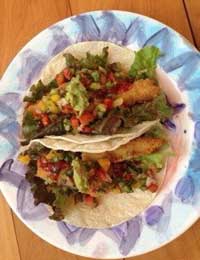
Soft fish tacos

Soft fish tacos

Looking for a gluten-free meal in a hurry which can easily convert for the rest of the family? Look no further!

Over summer, my clever husband built a patio and a large outdoor dining table – big enough for us plus quite a few more! One of our favourite summer dinners was eaten out there on many a pleasant evening. The best thing about this is it is quick and easy and extraordinarily tasty! And it’s all due to two new products I’ve found. The first, I sampled at the Gluten-free Food & Allergy Show last year and it was the Sealord Gluten-free Crumbed Fish Fillets. At the time, couldn’t think of any way I would use them. Then I came across Gerry’s Go No Gluten Wraps at a reasonable price, and EUREKA! A yummy new dinner, and what’s more, it’s one the whole family can enjoy, although for them, they just eat regular fish and wraps.

Soft fish tacos

  • Sealord Gluten-free Crumbed Fish Fillets (1 for each wrap)
  • Gerry’s Go No Gluten Wraps
  • lettuce
  • guacamole or avocado
  • light sour cream
  • sweet chilli sauce
  • salsa cruda (recipe below)
  • grated cheese (optional)
  • chopped tomato (optional)
  • grated carrot (optional)
  • sliced capsicum

Step 1 Prepare the salsa and guacamole a little before you are ready to serve the dinner.

Step 2 Cook the fish according to the directions – about 25 minutes in a hot oven.

Step 3 Heat the wraps in a cast iron frying pan just before serving.

Step 4 Put each of the toppings in separate dishes on the table.

The fish is tasty and the crumb is light. The wraps are very nice, and I found that they stayed good and fresh in the fridge for a week or so after opening the packet. They are best warmed through, either in a cast iron frying pan, microwave or oven. Best of all, they’re readily available at my local PAK’nSAVE! The wraps come in a bread and butter plate size or a dinner plate size depending on what you are after, and I’ve successfully done a variety of different meals with them. The key to the proper use of them is to heat them through thoroughly before trying to use them.

One of the things that really makes this dinner work for us is that I don’t have to remember who likes what. People simply put what they want in their own tacos. All the bowls of toppings go in the middle of the table, and we assemble our own tacos to suit our own tastes. This is a very no-fuss way of dining and takes into account all of the fads and fusses currently going on.

Salsa cruda

  • 1/2 red capsicum, finely chopped
  • 1/2 green or yellow capsicum, finely chopped
  • 1/2 red onion, finely chopped
  • 1 green chilli, finely chopped
  • 2 stalks celery, finely chopped
  • 1/2 tomato, finely chopped
  • 1/2 cup fresh coriander, chopped
  • 1 teaspoon cumin seeds
  • 2 tablespoons oil
  • 2 tablespoons red wine vinegar
  • salt and pepper, to taste

Step 1 Combine all ingredients in a bowl. Cover and refrigerate until it is time to serve. Excellent in tacos, fajitas, with salad and even with eggs as a huevos rancheros.

Option – make these into fajitas!

Rather than using fish, make these into chicken or beef fajitas. Spray a heavy-based frying pan with oil spray. Chop and lightly fry a couple of onions with some garlic. Thinly slice meat and quickly fry it. Add in sliced capsicums and cook until they just begin to char. Serve with the same accompaniments as above. This is just as quick as the fish tacos and very delicious.

Lisa

For those wanting more information on coeliac disease, check out the NZ Coeliac Society website www.coeliac.org.nz.

This blog is the opinion and experiences of its author and should not be taken as medical or dietetic advice. Healthy Food Guide has not verified the content and cannot endorse any advice given. Healthy Food Guide recommends seeking professional health advice for specific complaints or symptoms.
Friday, July 3, 2020

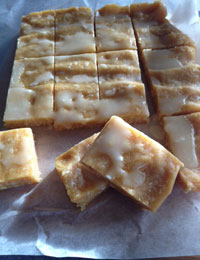
Variations on almond, coconut and lemon slice

Variations on almond, coconut and lemon slice

This is a very popular Healthy Food Guide recipe and on my list to convert.

My children have been delighted with this process because, as usual, I made the original version first. Opinion is evenly divided between the family and other blind tastings as to whether the original or the gluten-free version is better! Here’s the conversion, with some amendments and suggestions.

Makes 20 pieces
Time to make 15 minutes + overnight chilling

Ingredients

250g gluten-free milk arrowroot biscuits*
100g ground almonds
grated rind of 1 lemon
1/3 cup desiccated coconut
100g reduced-fat spread
3 tablespoons clear liquid honey
2 tablespoons gluten-free icing sugar
juice of 1/2 lemon

Instructions

Step 1 Place biscuits in a plastic bag and bash with a rolling pin until they resemble breadcrumbs. Place in a large bowl with almonds, lemon rind and coconut.

Step 2 Melt spread and honey together over a low heat. Add to the bowl and combine until mixture starts to stick together. Press into a lined baking tin using the palm of your hand. Refrigerate overnight.

Step 3 Mix icing sugar and lemon juice in a bowl until smooth. Drizzle over the almond and coconut base. Place in the fridge until the icing sets, then cut in slices.

Notes

  • *The first biscuits I used were Leda Milk Arrowroot biscuits. These biscuits are good because they are both gluten and dairy free, but they are quite strongly coconut flavoured which made the slice too ‘coconuty’ for my tastes. The second batch I made I used Freelicious Tea Biscuits, and I preferred the taste of these much more. My blind tasters couldn’t tell the difference between the two slices when I used these biscuits. At over $6 a packet, they were a lot more expensive than the milk arrowroot biscuits, so personal choice.
  • I added in 1/3 cup currants to the mix, and it made for a nice variant.
  • If I had a child who was gluten-free, this would make a great base for a birthday party lolly cake. Not that we would ever recommend such a thing on a Healthy Food Guide blog, but every now and again there is the requirement for such things, especially for gluten-free children.

Lisa

For those wanting more information on coeliac disease, check out the NZ Coeliac Society website www.coeliac.org.nz.

This blog is the opinion and experiences of its author and should not be taken as medical or dietetic advice. Healthy Food Guide has not verified the content and cannot endorse any advice given. Healthy Food Guide recommends seeking professional health advice for specific complaints or symptoms.
Thursday, July 2, 2020

Gluten-free eating around NZ

Gluten-free eating around NZ

We write a lot about places to buy and eat in the big cities, but not always about what is available in the smaller centres. Thanks to recent travels, I am pleased to be able to showcase a few places from around the country.

We’ve just returned from a week in a campervan with our eight-year-old boys. We drove from Christchurch to Oamaru, down to Moeraki, then up to Hanmer, through Gabriel’s Gully and Lewis Pass up to Blenheim. Then a very smooth ferry crossing, a brief visit to Martinborough and a windy night in Woodville, a lovely sunny day in Hawkes’ Bay (including some less healthy wine tasting), back up through Lake Whakamaru to Hamilton and on up to Auckland – just under 2000km in seven days. I was reminded what a beautiful country we live in and how nice it was to have a week travelling though it seeing lots of small out-of-the-way places.

It was a little more difficult for me to easily eat than for the rest of the family. Our campervan had a toaster and microwave but these only worked when the campervan was plugged in to power, so not so good when we were on the road. Breakfasts and dinners were easy enough, but lunches proved to be more challenging for me. What I should have done was make salads each morning and put them in the fridge for a quick lunch. Instead there was a lot of fruit, vegetables, rice crackers, cheese and hummus eaten as on-the-road meals. At least it was reasonably healthy, aside from the occasional fabulous gluten-free slices picked up in far flung places! If you’re travelling around, here are some places to buy and eat.

New World Fendalton

Seriously, this is the best supermarket I have ever been to when it comes to gluten-free shopping. Three things really stood out. First of all, everything which is gluten-free has a BLUE price sticker saying ‘Gluten Free’. How easy is that? Secondly, the pricing is excellent. At worst, comparable with the supermarket prices in Auckland and at best, significantly cheaper. Finally, and most importantly, the range of gluten-free food which was available. Honestly, it was a better and wider range than I have seen in any supermarket here or overseas and more than I have seen in some exclusively gluten-free shops. There were items I had never seen anywhere else. My only regret? There wasn’t enough space in the campervan to buy too much!! Brava New World Fendalton!

Lockie’s World Famous Blue Cod ‘n’ Chips,
Hampden, Otago

We visited the Moeraki Boulders and then the fur seal and penguin colony near the Lighthouse just south of Moeraki. On our way back up to Oamaru, we stopped for fish and chips – apparently at a fabulous place in a little settlement called Hampden. Given that I am unaccustomed to ever finding gluten-free battered fish at a chippie and there was no mention of it on the menu board, I resigned myself to chips only. My husband stepped up and asked if they had any gluten-free fish and blow me down, they did! The chips were great, the fish was lovely and the gluten-free batter light and tasty. The psychic seagulls who surrounded our car as we ate were a little creepy, but the food and the view more than made up for it.

PowerHouse Café, Hanmer Springs

We had a lovely evening in Hanmer at the pools, and found a most excellent campground. We headed out rather later than planned the next morning and decided to make a brief stop for coffee on our way. Hanmer has a plethora of cafés, and several of them advertised gluten-free options on their boards outside. I liked the look of the PowerHouse though, perched on a corner and an interesting shape. I was amazed when I walked in and looked at the cabinet food, most of which was gluten-free! On further discussion, I was advised that most of their menu was either gluten-free or could be made gluten-free very easily. Hoorah! I bought a very nice pistachio and ginger slice, but there were seven different kinds of friand, plus a variety of slices and cakes available as well. It was a lovely surprise.

Be Rude Not To, Rotorua

A friend put me on to this café. I had no idea what to expect when I walked in, and was completely blown away by the amount of food which was gluten-free, including TWO kinds of muffins. Be Rude Not To cleverly identifies their gluten-free products with orange tags, and have an extensive selection of food both in their cabinet and on their menu. All the food is beautifully presented and the hot chocolate should be ordered just to be admired.

Honourable Mention 1 – The Interislander Ferry

They actually had a poster on the wall of the boat advertising their gluten-free food, and in the hot food cabinet, they had a gluten-free pie! Good job, Interislander.

Honourable Mention 2 – Black Barn Vineyards, Havelock North

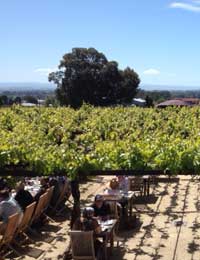
A lovely menu with gluten-free options marked and in the dessert section, a gluten-free licorice ice cream, which was just wonderful! A big thumbs up for wonderful service and free sunscreen as we sat outside under the vines enjoying our flash lunch in the sunshine.

So my advice would be to plan a bit and make sure you have plenty of snacks. I bought a supply of Pure Delish bars at the Fendalton New World, and they were a godsend. My experience does show though that there are gluten-free options nationwide and that as a nation, we are a lot more conscious of food restrictions than many other countries.

Do you have any hidden gems around the country you’d like to tell others about? Leave a note in the comments below!

Lisa

For those wanting more information on coeliac disease, check out the NZ Coeliac Society website www.coeliac.org.nz.

This blog is the opinion and experiences of its author and should not be taken as medical or dietetic advice. Healthy Food Guide has not verified the content and cannot endorse any advice given. Healthy Food Guide recommends seeking professional health advice for specific complaints or symptoms.
 

Wednesday, July 1, 2020

How do they produce sugar?

How do they produce sugar?

Transforming the sugar cane plant to crystal or liquid form for use is an involved process, as HFG senior nutritionist Rose Carr discovers.

Sugar cane is a tropical grass that’s typically grown in subtropical climates — Fiji and Queensland being the closest commercial growing areas to New Zealand. In Australia cane grows to around two to four metres high. In Queensland where it is hotter it takes around nine to 16 months for the cane to reach maturity. Cut cane resembles bamboo stalks and once cut it will start to deteriorate so the sugar cane is transported to the mill for processing as quickly as possible to retain the best quality. At the mill, sugar cane is chopped into short pieces which are then shredded to break down the hard outer structure of the cane. This fibrous material is then crushed through a series of rollers to extract the juice. The remaining fibrous material is used as fuel to run the furnaces at the mill.

Juice from the sugar cane is strained to remove large particles and impurities and then clarified. The juice is thickened by boiling and evaporating off excess water then sent to vacuum pans for crystallisation. The juice is ‘seeded’ with tiny sugar crystals and boiled so that more sugar crystals form. From here the crystals and mother liquid (molasses) around them are sent to a high-speed centrifuge where they are separated. The cane sugar crystals are washed with water, separated from the water and dried ready for dispatch to a sugar refinery. At this stage the sugar still contains impurities.

The Chelsea sugar refinery is the only sugar refinery in New Zealand. Cane sugar refined here is usually supplied from Australia. Ships usually arrive every six weeks at the refinery wharf. When HFG visited the refinery we were surprised the raw cane sugar looks very much like raw sugar we could eat. At this stage, however, it still needs to be refined as it is not food grade and cannot be sold for human consumption or used in food manufacturing.

The raw cane sugar is first washed with a hot sugar syrup to loosen the molasses film which coats the crystals. Hot water is then sprayed at the mixture while it’s spun at high speed in a centrifuge which separates the crystals from the syrup and other impurities.

Around 50 per cent of the colour is removed from the cane sugar during this process. Next, the sugar crystals are mixed with hot water and dissolved to form an amber-coloured syrup which is strained to remove impurities such as any remaining cane fibre.

The syrup to be used for white sugar is then filtered and clarified while raw sugar goes straight to the recrystallisation process. Milk of lime is added and carbon dioxide (CO2) gas is bubbled through the syrup. The lime and CO2 react to form calcium carbonate (chalk) which will help the filtering process. As the syrup is pumped through a series of filter presses, coloured impurities in the syrup cling to the calcium carbonate crystals.

The next step in the process is decolourisation where soluble impurities adhere to an adsorbent.

The two most common methods of decolourisation involve the use of either granular activated carbon or bone char, which is made from de-greased and burned cattle bones. Think of it like your water purifier at home. Bone char was previously used at the Chelsea refinery but these days activated carbon is used, which sounds a bit nicer — especially for vegetarians.

The now very clear sugar syrup is sterilised using ultraviolet light which will kill any pathogens that could potentially survive the high temperature processing. This progresses to the evaporator and then to the vacuum pan in the same sequence of evaporation, seeding and separating used to produce cane sugar. In the centrifuge, white food grade sugar is washed and retained in the inner basket and the syrup centrifuged to the outer shell. This syrup can be returned to the pans to grow more crystals, or it can be concentrated by the boil-out pans to be used to produce soft brown sugar, coffee crystals, golden syrup or treacle.

Moisture is removed from the white sugar crystals in warm dryers and the sugar is conditioned with a flow of dehumidified air, improving its storage properties. The white sugar — which makes up around 80 per cent of the refinery’s production — is ready for packing.

About 70-80 per cent of sugar worldwide is produced from sugar cane with the remainder made from sugar beet, a root crop which resembles a large parsnip. Sugar beet is grown in more temperate climates, mainly in Europe, the US, China and Japan.

  • Icing sugar is finely ground powdered sugar made from white sugar crystals. Chelsea icing sugar is mixed with a small amount of gluten-free tapioca starch to keep it free-flowing.
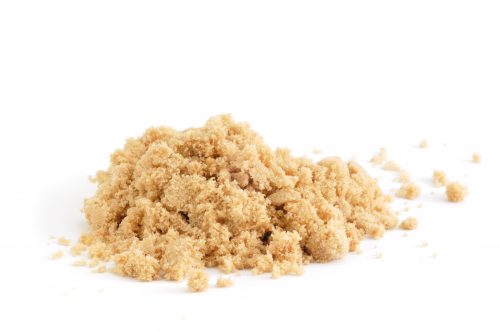
  • Soft brown sugar is a moist golden or very dark brown sugar with a very fine grain as it is a blend of the dark sugar syrups from the refining process and extra-fine castor sugar.
  • Raw sugar is crystalline sugar that has a cane- syrup coating on each crystal. It is simply the raw cane sugar from the sugar mills made food grade by dissolving, filtering and re-crystallising, so it retains the flavours and colour from the cane juice.
  • Golden syrup is made from the syrup removed during sugar refining. The sugar in the syrup is semi-converted to glucose and fructose using enzymes, which are then filtered out. This syrup is then partially decolourised leaving the golden syrup flavour and colour.
  • Treacle is made in the same way as golden syrup but it’s not decolourised, so it has a darker colour and stronger, slightly bitter flavour.
  • Molasses is a by-product of sugar refining and while some is now used for consumer products most is used in animal feeds. Blackstrap molasses, the darkest and thickest molasses, is made from the third boiling of the concentrated sugar juice produced during the refining of sugar cane.
  • Invert sugar syrup is a pale-coloured sweetener made from white sugar syrup. By adding an acid, the sucrose molecules break into their glucose and fructose components. Invert sugar, often used in baking and manufacturing, is around 10 per cent sweeter than sucrose (ordinary sugar) and not prone to crystallising.
  • Stored correctly, sugar has an unlimited shelf life.
  • White sugar is not bleached. The coloured molasses coating naturally present on crystallised cane sugar is removed during the refining process.
  • Sugar is a preservative. It helps to control the growth of bacteria and moulds in foods such as jam.
  • Sugar not only adds sweetness but helps make cakes light and fluffy by incorporating air into the mixture during the creaming process. These air cells then expand during the baking process when filled with gases from the leavening agent such as baking powder.
  • Interestingly, when the Auckland Harbour bridge was built the build had to accommodate the passage of the sugar ships to the Chelsea refinery.
  • The Chelsea refinery now processes over 200,000 tonnes of raw sugar each year. Ninety per cent of this is for the New Zealand market.